· GH Roofing
A flat roof may be repairable when the defect is localised and the surrounding covering and deck are sound. Widespread deterioration, recurring failures or damage beneath the waterproofing can make replacement more appropriate.
Neither a leak nor standing water establishes the answer on its own. Drainage, roof edges, junctions and the condition of the underlying structure need checking before deciding what work is sensible.
What visible symptoms can tell you
Leaks near rooflights, wall junctions or outlets may indicate a fault in a particular detail rather than failure across the entire roof. Record where damp appears indoors and whether it follows prolonged rain or a particular wind direction. The visible stain may not be directly beneath the source.
Splits, blistering and deterioration at edges are reasons for assessment where visible from the ground or a safe position. Do not walk onto a flat roof to look for them. Coverings and rooflights can be fragile even when their surfaces appear intact.
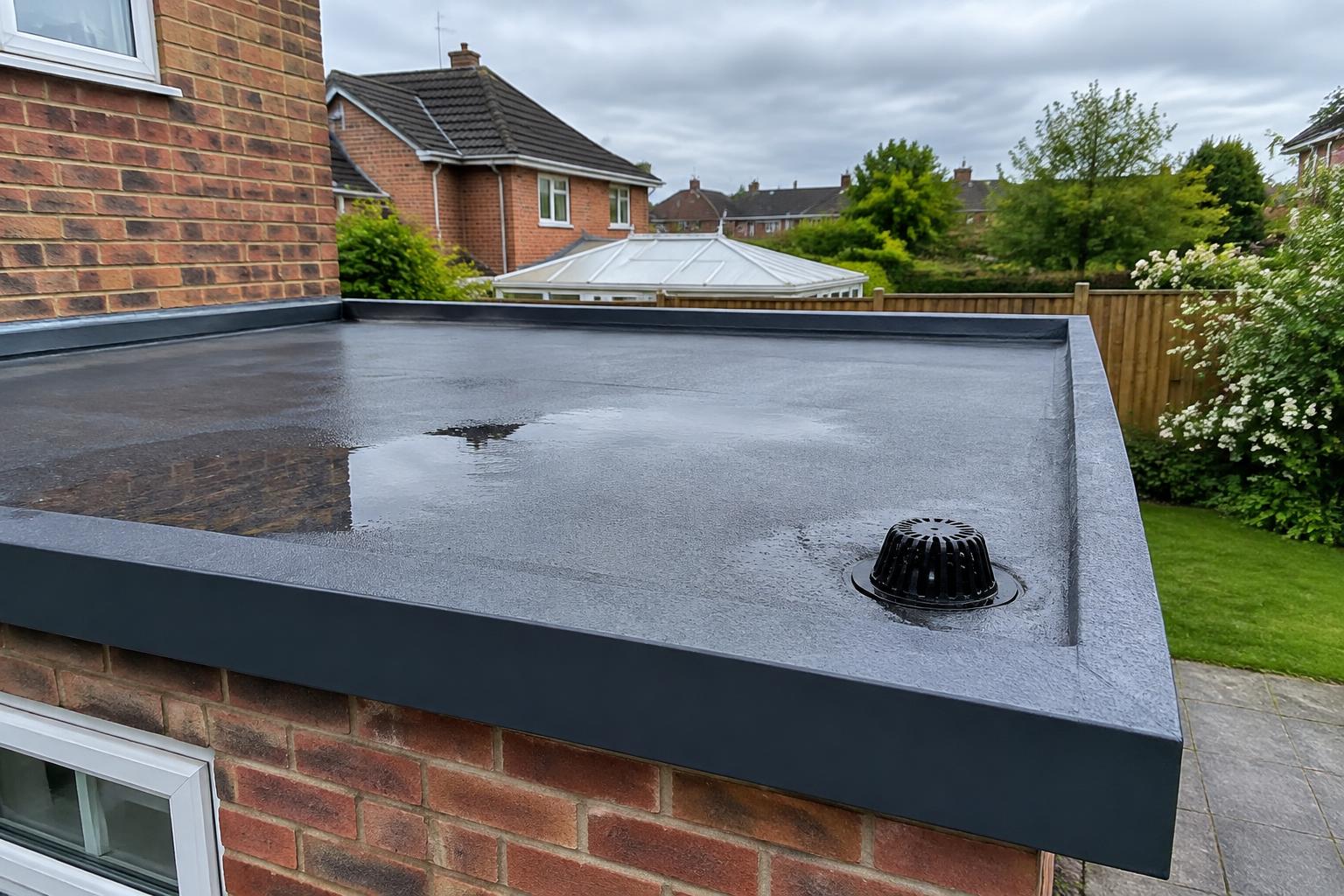
Standing water needs context. How long it remains, whether it is a recent change and how the roof is designed to drain all matter. Persistent or new ponding, particularly alongside a leak, should be investigated, but a photograph of a puddle does not establish that the whole roof has failed.
A blocked outlet can affect drainage, while inadequate falls or movement in the underlying structure may need a different response. The inspection should distinguish these possibilities instead of treating all retained water as the same problem.
When a local repair may be suitable
A repair can be reasonable where the source is identified and sound surrounding material allows a suitable connection. The proposed method needs to suit the existing waterproofing system. Ask what defect the repair addresses and how the adjacent material has been assessed.
An isolated junction repair is different from applying another patch over an area that repeatedly fails. Share the history of earlier repairs, including whether they changed the leak. Recurrent symptoms can mean that the original cause was missed or that deterioration extends further than first thought.
The deck beneath the waterproofing matters as much as the visible surface. If it is damaged or moisture is trapped within the roof, a surface repair may not address the underlying problem. Ask what can be established during inspection and what may require opening up.
What replacement needs to resolve
Replacement should address the roof arrangement, not simply provide a different surface. Falls towards outlets, drainage routes, upstands at adjoining walls and details around rooflights all influence how the finished roof handles rainwater.
Sometimes the proposal may include retaining existing layers. Whether that is suitable depends on the current system, its condition and the proposed specification. Trapped moisture and damaged decking should not be concealed beneath a new covering. Ask how the existing roof would be checked before any decision to retain it.
Insulation and ventilation need consideration as part of the roof build-up. The appropriate arrangement depends on the structure and how the space beneath is used. Planning and building control requirements must also be checked for the particular property and scope of work.
A clear proposal should identify what would be removed, what would remain and how concealed damage would be handled. It should also explain whether drainage or junction alterations are necessary, rather than leaving those questions until a new covering is being installed.
Checklist before discussing the work
- Describe whether the roof covers an extension, garage or another space. Give its approximate size if you already know it without needing to access the roof.
- Note when leaks occur and whether water remains visible after rain from a safe position. Explain whether this is a recent change.
- Mention rooflights, wall junctions, outlets and previous repairs. These details help focus the initial discussion.
- Provide photographs only from the ground or an already safe position. Let the contractor plan suitable roof access.
- Ask how the covering and deck will be assessed. Request clarity about drainage, retained layers and any further investigation required.
Questions homeowners ask us
Does standing water mean the whole roof has failed?
Not necessarily. The roof system, drainage and how long the water remains all matter. Persistent or new ponding needs assessment, especially with a leak, but does not by itself prove replacement is required.
Can a new covering be laid over the existing roof?
That depends on the existing system, its condition and the proposed specification. Trapped moisture or a damaged deck must not be concealed. Ask what will be removed and how the underlying roof will be checked.
Can I walk onto the roof to take photographs?
Do not assume a flat roof is safe to walk on. Rooflights and weakened coverings can be fragile even when they appear intact. Take photographs only from an already safe position and leave access planning to the contractor.
A clear assessment should explain whether an isolated repair is sound or whether the roof needs broader work, including the details that caused the problem.
For help understanding what your flat roof needs, call 07518 378485 or send an enquiry.
Need help with your roof?
For advice on your property, call 07518 378485 or send us an enquiry.