· GH Roofing
Repeated leaks, widespread damage to tiles or slates, and deterioration beneath the covering can make a new roof worth considering. The decision should follow an assessment of the roof as a whole, not a judgement based only on its age or appearance.
A local defect may still be repairable. Replacement becomes a more relevant discussion when problems extend across the roof or the underlying materials no longer provide a sound basis for further repairs.
Look for patterns rather than a single symptom
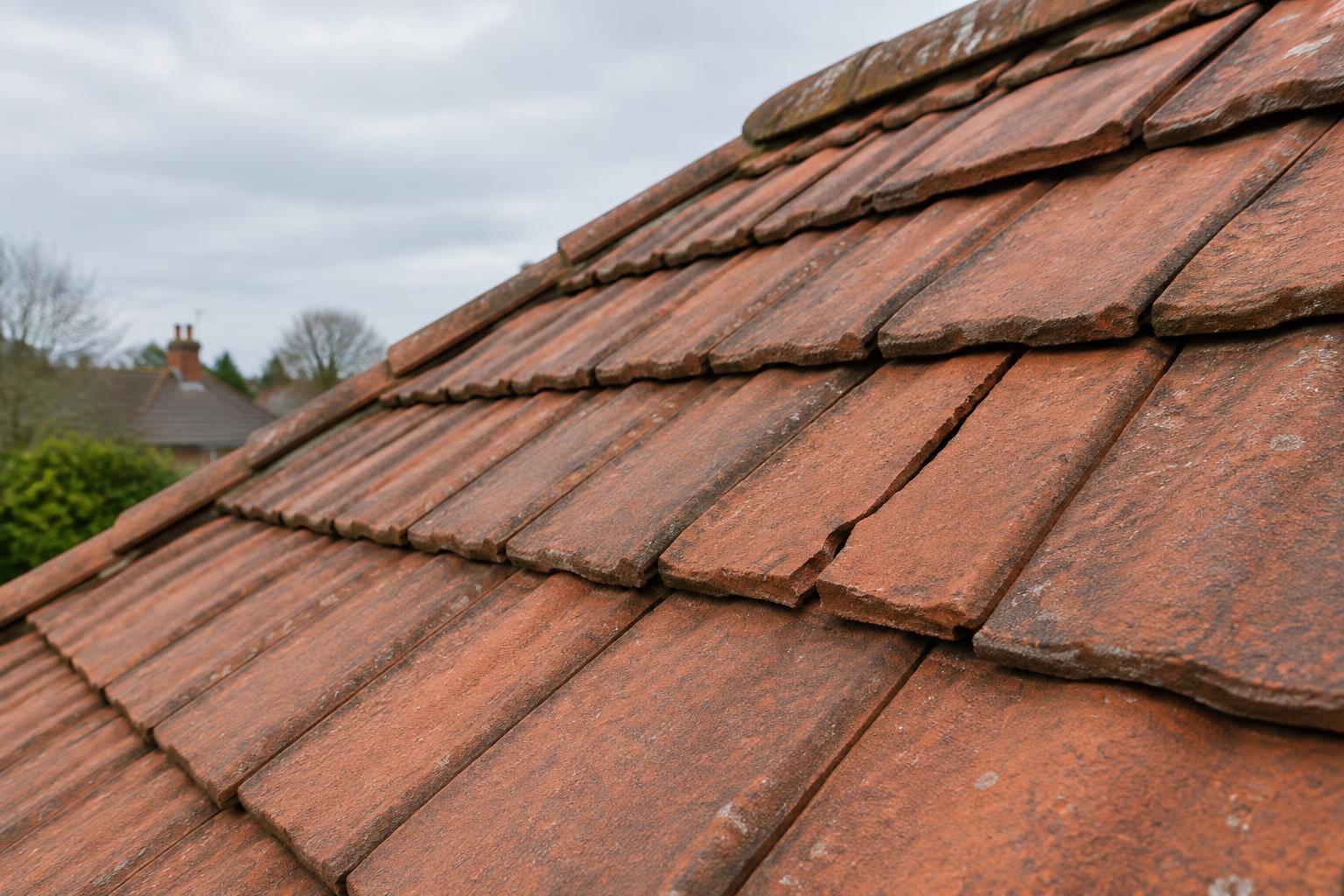
One slipped tile and damage across several slopes raise different questions. From the ground, note whether defects appear confined to one area or are scattered across the covering. Missing pieces, uneven lines and repeated displacement all deserve inspection, but photographs alone cannot establish the condition underneath.
Indoors, recurring damp in several places may suggest a wider problem, although each mark still needs its source established. Water can travel before it shows, and condensation or plumbing faults can resemble roof leaks. Avoid treating every stain as separate proof that the covering has failed.
A history of repairs is useful evidence. Tell the roofer what was repaired, whether it stopped the leak and when symptoms returned. Repeated attention to one junction may indicate an unresolved detail rather than a need to replace every roof slope.
Weathering and age provide context, not a verdict. A roof that looks old may remain serviceable, while a more recent covering can have defective junctions or fixings. Ask for an explanation linked to observed condition rather than age alone.
What a roof assessment should consider
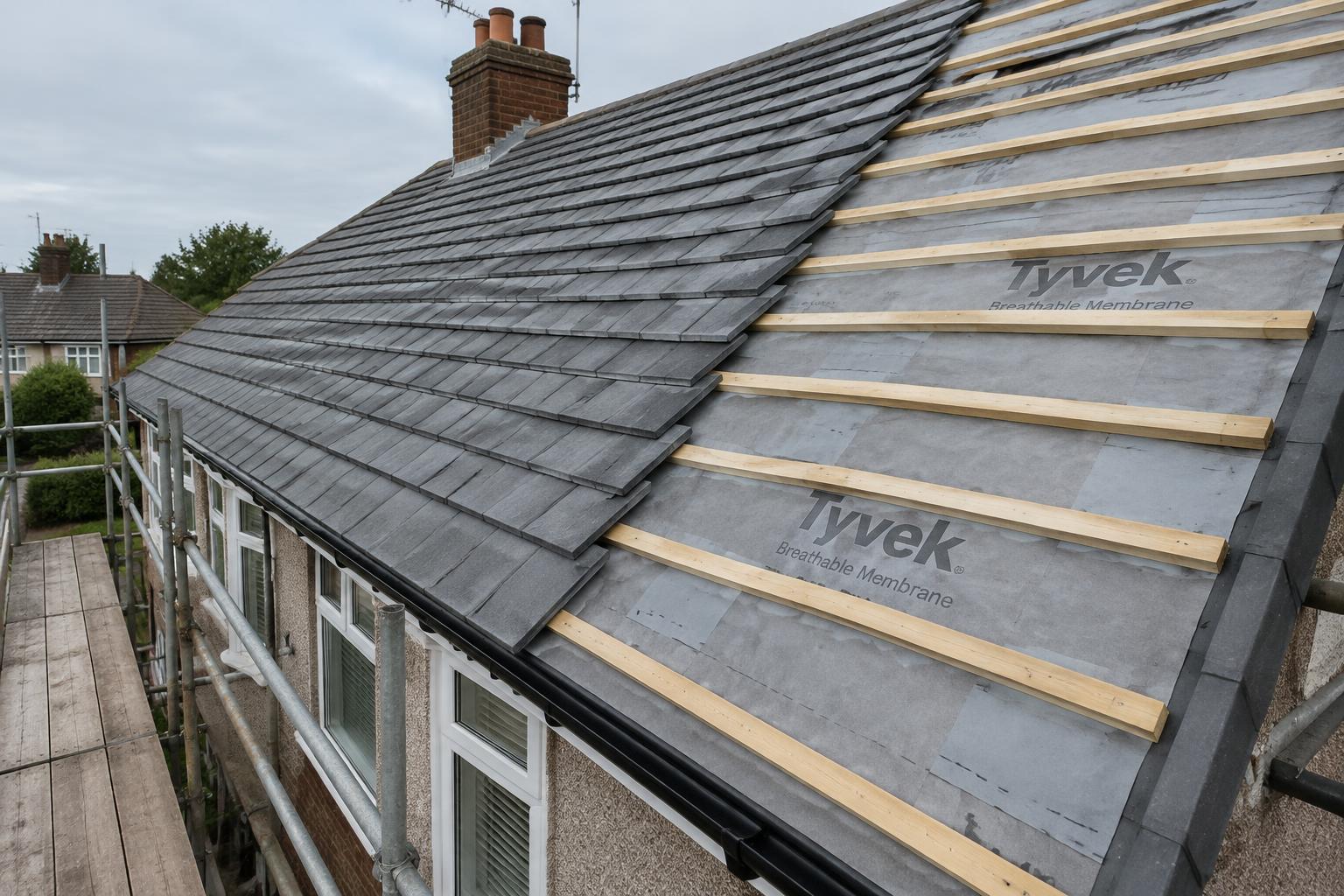
Tiles or slates are only part of the roof. Battens hold the covering, underlay forms part of the weathering arrangement, and flashings protect junctions. The condition of these elements helps determine whether replacing individual pieces is a sensible longer-term approach.
Ventilation and insulation also need consideration together. An unused loft and an occupied roof space can need different arrangements. Changes should not block required airflow or trap moisture, and an existing condensation problem should not simply be concealed beneath new materials.
Roof shape and junctions affect the work. Chimneys, valleys, dormers and roof windows introduce details that must connect properly with the covering. Ask which of these are included in the assessment and whether any further investigation is needed before the scope is settled.
Comparing repairs with a re-roof
A repair proposal should explain why the surrounding roof can support the work. A replacement proposal should explain what makes a larger intervention appropriate and identify which layers would be renewed or retained. Neither option should rely solely on a general description such as an ageing roof.
A re-roof involves more than choosing a tile colour. Suitable materials, fixings, underlay, battens, ventilation, flashings and drainage need to work together. Ask how unexpected deterioration discovered during stripping would be explained and agreed before additional work proceeds.
Planning and building control requirements must be checked for the particular property and proposed work. Listed status, local restrictions and changes to materials can affect what needs consideration. Do not assume that retaining a similar appearance settles every requirement.
The practical arrangements matter too. Discuss access, protection of occupied rooms and how the work would be organised around weather conditions. Explain if the loft is used as living space so this is considered when planning the approach.
Checklist for discussing a new roof
- Gather details of recurring leaks and previous repairs. Separate confirmed findings from anything you have only been told might be wrong.
- Photograph visible defects from the ground and indoor marks from a safe position. Do not climb onto the roof to inspect hidden layers.
- Explain the property type, loft use and any access restrictions. Mention roof windows, dormers and adjoining structures.
- Ask for the proposed scope to distinguish retained materials from renewed elements. Include junctions, ventilation and drainage in the discussion.
- Raise any known planning restrictions or listed status. Ask how the requirements for your particular property will be checked.
Questions homeowners ask us
Does an old roof always need replacing?
No. Age alone does not establish whether replacement is necessary. The condition of the covering, supporting layers and junctions is more useful when deciding whether repairs remain appropriate.
Can repeated leaks still be repaired?
Sometimes, particularly where an unresolved local fault explains the symptoms. Repeated leaks need a wider assessment to establish whether the problem is isolated or reflects more extensive deterioration.
What should a re-roof proposal include?
It should explain the covering and underlying work, together with relevant flashings, ventilation and drainage details. Ask which elements would remain, what is still uncertain and how property-specific requirements will be checked.
The useful distinction is not simply between an old roof and a new one, but between a roof that can be repaired soundly and one needing broader renewal.
To discuss what your roof needs, call 07518 378485 or send an enquiry.
Need help with your roof?
For advice on your property, call 07518 378485 or send us an enquiry.