· GH Roofing
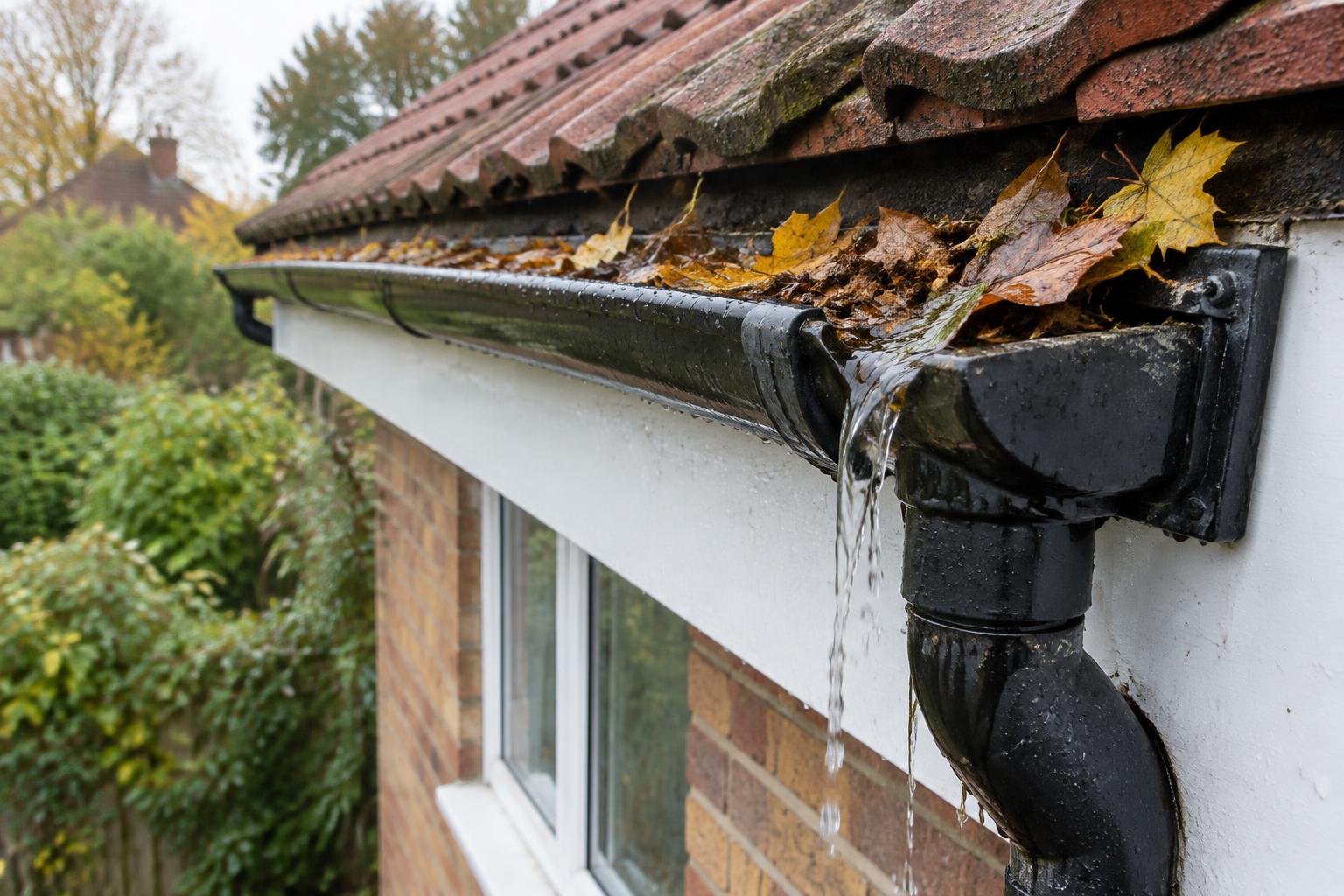
Overflowing gutters can result from debris, a blocked downpipe, a leaking joint or poor alignment. Cleaning or a targeted repair may be enough, so repeated overflow does not automatically mean all the guttering needs replacing.
If the problem continues, the outlets, supports and surrounding roofline should be assessed together. Fascias, soffits and the roof edge can affect both drainage and the appropriate repair.
Observe where the water escapes
Watch from the ground or a safe position during rainfall, without standing beneath loose guttering or other materials. Note whether water spills over a long section, escapes at one joint or runs down beside a downpipe. These observations help direct an inspection, but they do not prove the cause.
Leaves, moss and other debris can obstruct gutters or collect around outlets. A blockage lower down a downpipe may also restrict flow even when the visible gutter appears reasonably clear. Ask for the drainage route to be checked rather than assuming the first visible debris explains everything.
Dripping at a joint can point to a local connection problem. Water spilling over an edge may involve alignment, support or an obstructed outlet. Several defects can occur together, so a local drip and a sagging run should not necessarily be treated as separate issues.
Record whether overflow happens in ordinary rain or only during a heavier downpour. This information is useful when considering how the system performs. It does not replace checking the physical condition and arrangement of the guttering.
Decide between cleaning, repair and renewal
Cleaning may resolve a blockage where the gutter, fixings and drainage route remain serviceable. Ask whether outlets and downpipes also need attention, because clearing only a short section can leave the restriction in place.
A local repair may involve a joint, bracket or section of guttering. The supporting material needs to be sound, and the repaired section must connect appropriately with the existing run. Adjusting alignment may be relevant where water is not reaching the outlet as intended.
Renewal becomes a more relevant option where materials are deteriorated, support has failed or the arrangement cannot be made serviceable through a local repair. Ask which parts need replacement and why. A problem affecting one elevation is not, by itself, evidence that every gutter around the property has failed.
If overflow returns after cleaning, do not assume the same treatment is the only option. The outlet, downpipe, gutter falls and fixings need reconsideration. Recording where water now escapes can help establish whether the original problem remains or a different fault is present.
Check the roofline and damp together
Fascia boards commonly carry gutter fixings. Deteriorated support can affect alignment, so attaching a replacement gutter without checking the fascia may leave an underlying fault unresolved. Ask how the support will be assessed and whether any damaged material needs attention.
Soffits and other eaves details may form part of the roof's ventilation arrangement. Repairs or renewal should preserve the required airflow rather than closing gaps indiscriminately. The appropriate detail depends on the particular roof construction.
Repeated overflow can wet the wall below and may contribute to damp, but it is not proof of the damp's cause. Wall condition, openings and other routes for moisture may also need assessment. Note whether indoor marks correspond with the overflowing area without assuming a direct connection.
Where wider roofline changes are proposed, ask whether any property-specific planning or building control requirements need checking. The scope and the building matter, particularly where restrictions are already known. Do not assume that every replacement detail can be chosen without considering the existing arrangement.
Checklist for a useful initial enquiry
- Identify which side of the property is affected. Describe whether the water escapes at a joint, outlet or along a run.
- Take photographs from the ground or a safe position. Do not climb onto the roof or lean out to inspect a gutter.
- Explain whether cleaning or repairs have already been attempted. Note how long any improvement lasted and whether the overflow moved elsewhere.
- Mention sagging guttering, visible fascia deterioration or damp on nearby walls. Keep observations separate from assumptions about the cause.
- Describe the building height and access restrictions such as conservatories or extensions. These affect how inspection and work can be arranged.
Questions homeowners ask us
Should I replace gutters that keep overflowing?
Not before the cause is checked. Debris, blocked downpipes or poor alignment can cause overflow even with serviceable guttering. Deterioration or failed support may call for repair or renewal.
Why does guttering matter for damp on walls?
Water repeatedly spilling over the roof edge can soak the wall below. That is one possible contributor to damp, not proof of its cause. The wall and other potential water routes may also need assessment.
Should fascias and soffits be checked at the same time?
Yes, where relevant. Fascias support gutter fixings, while soffit details can form part of eaves ventilation. A repair should address deteriorated support and preserve the required airflow.
The aim is to establish why water is escaping and address that cause, rather than assume that cleaning or wholesale replacement is always the answer.
To discuss overflowing gutters or roofline concerns, call 07518 378485 or send an enquiry.
Need help with your roof?
For advice on your property, call 07518 378485 or send us an enquiry.